
Homeopathy Treatment for Genital Herpes: A Natural, Long‑Term Approach
Genital herpes is a common sexually transmitted infection caused by the Herpes Simplex Virus (HSV), leading to painful blisters and sores in the genital area in both men and women. Conventional treatment mainly offers temporary relief with antiviral drugs, but often fails to prevent frequent recurrences. Homeopathy treatment for Genital herpes, on the other hand, works at a deeper level by strengthening the body’s own healing power, reducing the frequency and severity of outbreaks, and aiming for long‑term control and possible cure when taken under expert guidance. Also Read: Homeopathy Treatment for Herpes
What is Genital Herpes?
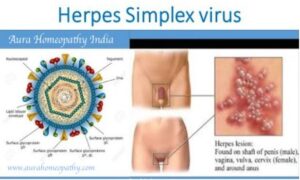
Genital herpes is a viral infection caused by Herpes Simplex Virus (HSV), most commonly HSV‑2, though HSV‑1 (usually responsible for oral herpes) can also cause genital infection through oral‑genital contact. The virus enters through tiny breaks in the skin or mucous membranes of the genitals, mouth, or anus and then lies dormant in nerve ganglia, reactivating later to cause recurrent outbreaks.
Common Symptoms
Small, painful, fluid‑filled blisters or sores on the penis, scrotum, vulva, vagina, anus, buttocks, or inner thighs.
Intense itching, burning, and stinging around the affected area, often before blisters appear.
Pain during urination (especially in women) and discomfort in the genital region.
Flu‑like symptoms (fever, body aches, swollen lymph nodes) during the first outbreak.
Recurrent episodes that may be milder but still distressing, often triggered by stress, illness, or hormonal changes.

Homeopathy Treatment For Genital Herpes
How Homeopathy treatment for Genital herpes Works
Homeopathy does not directly “kill” the virus like antivirals; instead, it stimulates the body’s own immune and healing mechanisms to better control the infection and reduce the tendency to recurrent outbreaks.
1. Treats the Root Cause, Not Just Symptoms
Conventional treatment often suppresses the visible sores, but the virus remains in the body and can reactivate. Homeopathy aims to treat the underlying susceptibility, so that:
The frequency and intensity of outbreaks gradually decrease.
Healing of sores becomes faster and more complete.
The body becomes more resistant to triggers like stress, fatigue, and hormonal fluctuations.
2. Individualized, Symptom‑Based Treatment
Homeopathy is not a one‑size‑fits‑all system. A qualified homeopath takes a detailed case history, including:
Exact location, appearance, and sensation of the sores (burning, itching, stinging, pain).
Aggravating and relieving factors (worse at night, from warmth, before menses, etc.).
Associated symptoms (discharge, tenderness, emotional state, general health).
Based on this, a constitutional remedy is selected that matches the person’s unique symptom picture, not just the diagnosis of “genital herpes.”
3. No Suppression, Only Healing
Homeopathy strongly discourages suppression of skin symptoms, as this may drive the disease deeper and lead to more complex chronic conditions. Instead, it promotes:
Natural healing of the sores without masking them.
Gradual reduction in recurrences over time.
Improved overall vitality and immunity.
4. Safe, Natural, and Side‑Effect‑Free
Homeopathic medicines are prepared from natural substances (plants, minerals, etc.) in ultra‑dilute forms. They are:
Non‑toxic and safe for long‑term use.
Suitable for adults, including those with other chronic conditions.
Free from the side effects commonly seen with long‑term antiviral use.
Top Homeopathic Medicines for Genital Herpes
Below are some of the most commonly indicated homeopathic remedies for genital herpes, based on specific symptom patterns. These should always be taken under the supervision of a qualified homeopath.
1. Natrum Muriaticum – For Itching and Stinging Sores
Best suited for:
Both men and women with blisters on the genitals (penis, scrotum, vulva, vagina, around anus).
Marked itching and stinging pain, especially on the glans penis or vulva.
Burning and soreness in the vagina after urination.
Symptoms often worse before menses; may have white, burning vaginal discharge.
When to consider: Natrum Mur is a leading remedy when herpes sores are accompanied by intense itching and stinging, and when outbreaks are linked to emotional stress or hormonal changes.
2. Petroleum – For Intense Itching and Red, Oozing Sores
Best suited for:
Sores that are very itchy, red, and may ooze fluid or become dry and cracked.
In men: blisters mainly on the scrotum and foreskin.
In women: outbreaks with itching that occur frequently around the time of menses.
Burning sensation in the vagina; skin may become rough and fissured.
When to consider: Petroleum is indicated when itching is severe, the skin is red and inflamed, and the condition tends to flare up with hormonal changes or damp weather.
3. Nitricum Acidum – For Painful, Ulcerative Sores
Best suited for:
Ulcers on the genitals (scrotum, foreskin in men; inside the vagina in women) that are very painful and sore.
Sores that ooze foul‑smelling fluid or blood.
Burning and stinging pain; intense tenderness.
Itching and burning ulcers in the vagina.
When to consider: Nitricum Acidum is a key remedy when herpes lesions turn into deep, painful ulcers with offensive discharge and marked burning.
4. Sepia Officinalis – For Women with Tenderness and Discharge
Best suited for:
Women with blisters on the vulva, vagina, or around the genitals.
Marked tenderness and soreness in the genital area.
Itching on the external genitals, often with yellowish or greenish vaginal discharge.
May feel irritable, fatigued, and worse before menses.
When to consider: Sepia is a top choice for genital herpes in women who have tender sores along with abnormal vaginal discharge and hormonal aggravation.
5. Hepar Sulphur – For Extremely Sensitive Sores (Men)
Best suited for:
Small, grouped blisters on the male genitals that are white with a red base.
Extreme sensitivity to touch; even light contact causes pain.
Itching may be present, but pain and tenderness dominate.
When to consider: Hepar Sulphur is ideal when the sores are very tender and painful to touch, and the person is chilly and easily offended.
6. Mercurius Solubilis – For Oozing Blisters on the Penis
Best suited for:
Multiple blisters on the glans penis and shaft that ooze fluid.
Burning sensation on the penis.
May have offensive genital discharge and swollen glands.
When to consider: Mercurius Solubilis is indicated when blisters are numerous, ooze fluid, and are accompanied by burning and swollen lymph nodes.
7. Mezereum – For Painful, Crusty Eruptions
Best suited for:
Herpetic eruptions that are very painful and intensely itchy, especially at night.
Vesicles that form thick, honey‑like crusts with pus underneath.
Pain may persist even after the sores have healed.
Patient is chilly, sensitive, and symptoms worsen in cold weather.
When to consider: Mezereum is useful when herpes lesions are extremely painful, form thick crusts, and the itching is worse at night and from warmth.
8. Arsenicum Album – For Burning Pain Relieved by Warmth
Best suited for:
Small, ulcerative sores that are extremely sensitive to touch.
Severe burning pain and restlessness.
Anxiety, fear, and restlessness, especially at night; symptoms improve with warmth and warm drinks.
When to consider: Arsenicum Album is indicated when there is intense burning, restlessness, and anxiety, with relief from warmth.
9. Dulcamara – For Outbreaks Triggered by Cold, Damp Weather
Best suited for:
Herpetic eruptions that appear after exposure to cold, damp weather or sudden suppression of perspiration.
Sores that are itchy, moist, and burning.
Symptoms worsen in rainy or humid conditions and improve in warm, dry surroundings.
Often a history of recurrent skin issues with weather changes.
When to consider: Dulcamara is a key remedy when herpes outbreaks are clearly linked to cold, damp exposure and worsen in humid weather.
10. Graphites Naturalis – For Chronic, Recurrent Herpes
Best suited for:
Chronic, recurrent genital herpes with moist, sticky, honey‑like discharge.
Skin that is unhealthy, cracks easily, and heals slowly.
Patient is chilly, constipated, and may have a tendency to obesity or eczema.
When to consider: Graphites is a constitutional remedy for long‑standing, recurrent herpes with slow healing and sticky discharges.
How to Use These Remedies (General Guidance)
Potency and dose: Low to medium potencies (6X, 30C) are commonly used initially; higher potencies (200C, 1M) should only be taken under a homeopath’s supervision.
Frequency: Typically 1–3 times daily at the start of an outbreak, then reduced as improvement occurs.
Duration: Continue for about 1 month at the recommended dose; for longer use or high potencies, always consult a qualified homeopath.
Important: Self‑medication is not advised for genital herpes. A proper diagnosis and individualized prescription are essential for safe and effective treatment.
Lifestyle and Supportive Measures
Along with homeopathic treatment, the following measures can help reduce recurrences and support healing:
Maintain good genital hygiene and avoid tight, synthetic underwear.
Wear loose, cotton clothing to reduce friction and sweating.
Manage stress through yoga, meditation, or counseling.
Eat a balanced diet rich in fruits, vegetables, and whole grains; avoid excessive sugar and processed foods.
Ensure adequate sleep and regular exercise to support immunity.
Practice safe sex and open communication with partners about the condition.
When to See a Doctor
First episode of genital sores or severe symptoms.
Recurrent outbreaks that are frequent or very painful.
Pregnancy or planning pregnancy with a history of genital herpes.
Signs of complications like difficulty urinating, high fever, or sores spreading to other areas.
Best Homeopathy Treatment For Genital Herpes
Frequently Asked Questions (FAQ) – Homeopathy Treatment for Genital Herpes
1. Is genital herpes curable with homeopathy?
Homeopathy cannot “eliminate” the virus from the body like a vaccine, but it can significantly reduce the frequency and severity of outbreaks and, in many cases, lead to long‑term remission where the person remains symptom‑free for years. With constitutional treatment, the body’s resistance improves so that recurrences become rare or stop altogether.
2. How does homeopathy treat genital herpes?
Homeopathy works by stimulating the body’s own healing and immune mechanisms. Instead of just suppressing the sores, it treats the underlying susceptibility, so that:
Healing of sores becomes faster.
The number and intensity of outbreaks gradually decrease.
The body becomes more resistant to common triggers like stress, illness, and hormonal changes.
3. Can homeopathy stop recurrent outbreaks?
Yes, one of the main strengths of homeopathy in genital herpes is its ability to reduce recurrences. By selecting a remedy that matches the individual’s symptom pattern and constitution, homeopathy helps the body gain better control over the virus, leading to fewer and milder outbreaks over time.
4. Is homeopathic treatment safe for genital herpes?
Yes, homeopathic medicines are prepared from natural substances in highly diluted forms and are generally safe when taken as prescribed. They do not cause the side effects commonly seen with long‑term use of antiviral drugs (like liver or kidney strain, gastrointestinal upset, etc.).
5. Can I take homeopathy along with allopathic antivirals?
Yes, homeopathy can be taken alongside conventional antivirals, especially during acute outbreaks. Over time, as the condition improves with homeopathy, many patients are able to reduce or stop antiviral medication under medical supervision. Always inform both your allopathic doctor and homeopath about all medicines being taken.
6. How long does homeopathic treatment take for genital herpes?
The duration varies from person to person:
Acute outbreaks may improve within days to a week with the right remedy.
For recurrent herpes, constitutional treatment usually takes 6–18 months or more to achieve long‑term control.
Regular follow‑ups and adherence to the prescribed plan are important for best results.
7. What are the best homeopathic medicines for genital herpes?
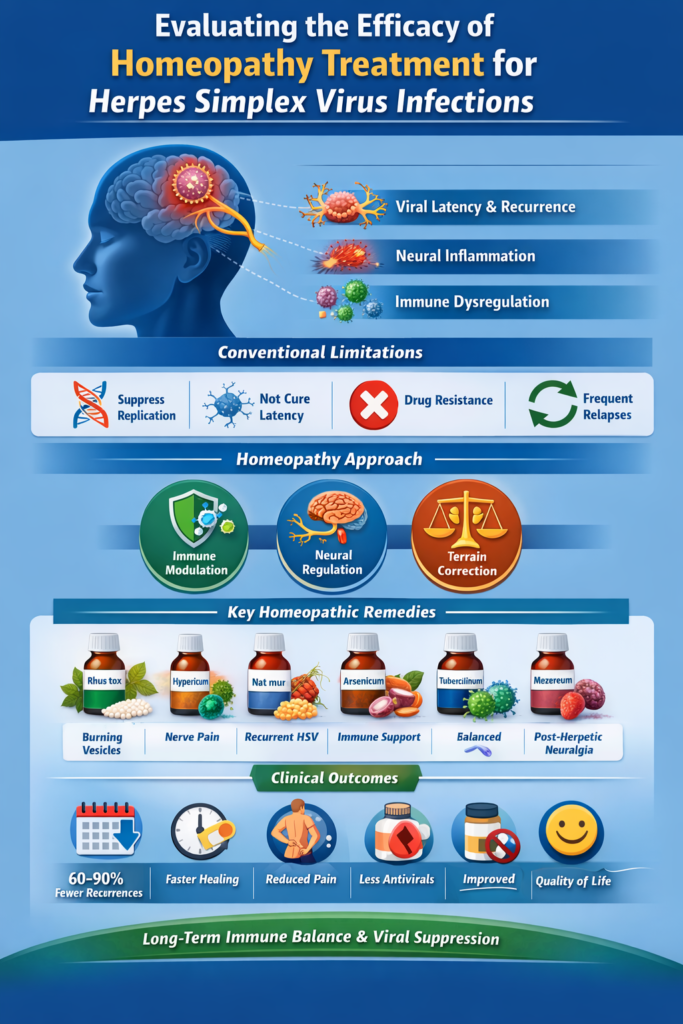
Commonly used remedies include Natrum Muriaticum, Petroleum, Nitricum Acidum, Sepia, Hepar Sulphur, Mercurius Solubilis, Mezereum, Arsenicum Album, Dulcamara, and Graphites. The choice depends on the exact symptoms (location, sensation, discharge, aggravations, etc.) and the individual’s overall constitution.
8. Can homeopathy treat herpes in both men and women?
Yes, homeopathy is effective for genital herpes in both men and women. The remedies are selected based on the specific symptoms in each case, so the treatment is tailored whether the sores are on the penis, scrotum, vulva, vagina, or around the anus.
9. Does homeopathy suppress the sores?
No, homeopathy does not suppress skin symptoms. It promotes natural healing of the sores while working to reduce the tendency to recurrence. Suppressing sores without addressing the root cause can make the condition more complex, which is why homeopathy always aims for true cure, not temporary suppression.
10. Can diet and lifestyle help in managing genital herpes?
Yes, a healthy lifestyle supports homeopathic treatment:
Eat a balanced, nutrient‑rich diet and avoid excessive sugar and processed foods.
Stay well‑hydrated and get adequate sleep.
Manage stress through relaxation techniques.
Avoid known triggers like excessive alcohol, smoking, and extreme fatigue.
11. Is genital herpes dangerous?
Genital herpes is not life‑threatening in most people, but it can cause:
Painful, recurrent outbreaks that affect quality of life.
Emotional distress, anxiety, and relationship issues.
Risk of transmission to sexual partners.
In pregnant women, risk of neonatal herpes if there is an active outbreak during delivery.
12. Can I pass herpes to my partner even without sores?
Yes, the herpes virus can be shed from the skin even when there are no visible sores (asymptomatic shedding). This is why:
Using condoms and antiviral suppressive therapy (if advised) reduces but does not eliminate the risk.
Open communication with partners and regular follow‑up with a doctor are important.
13. How is genital herpes diagnosed?
Diagnosis is usually based on:
Clinical examination of the sores and history of sexual activity.
Blood tests (HSV‑1 and HSV‑2 antibody tests) to confirm past or current infection.
In some cases, swab tests from active sores (PCR or viral culture).
14. Should I tell my partner about my genital herpes?
Yes, honest communication is important:
It allows both partners to make informed decisions about protection and testing.
It reduces anxiety and builds trust in the relationship.
With proper precautions and treatment, a healthy sexual relationship is still possible.
15. Can genital herpes be mistaken for other conditions?
Yes, genital herpes can resemble:
Fungal infections (candidiasis).
Bacterial infections (boils, folliculitis).
Other STIs (syphilis, chancroid).
Because of this, a proper medical evaluation is essential before starting any treatment, including homeopathy. If you or a loved one is dealing with frequent herpes outbreaks and looking for effective Homeopathy Treatment For Herpes, don’t just cover up the symptoms — aim for long‑term healing.